Specialized vs General-Purpose AI Order Management Platforms in Perishable Distribution
Specialized platforms handle perishable food's unique demands better than general-purpose software.
Perishable distribution runs on catch weight instead of fixed units, daily price swings instead of stable price books, and delivery windows measured in hours instead of days, assumptions that general-purpose order management software was never built to handle. The platforms distributors choose to manage this gap, and whether those platforms can read a text order in one language or a messaging app order in another without a human stepping in, has become one of the clearest dividing lines in food distribution technology.
Why perishable distribution is structurally different from the wholesale categories general-purpose AI was built for
Most order management software on the market today traces its design back to categories where a SKU ordered on Monday is the same SKU on Friday: hardware, office supply, consumer packaged goods. These categories share three traits that make general-purpose automation workable. The unit of sale is fixed, so a "case" always weighs the same amount. The price is set and holds for days or weeks at a stretch. The lead time between order and delivery is long enough to absorb a data error before it turns into a shipped mistake.
Perishable food distribution breaks every one of those conditions before the first order of the day gets keyed in. A case of fish does not weigh the same thing twice. A seafood buyer who places an order Tuesday morning can be quoted a different price than one who calls Monday afternoon, because the market moved. The gap between order and delivery is often overnight. There's no slack built in to catch a transcription error before a truck leaves the dock. None of this is a matter of a platform missing a few settings a distributor could turn on. It reflects a data model and an architecture written for a different kind of commerce, and extending that architecture into perishable goods does not close the gap, it just delays it until it appears as a wrong invoice or a short-shipped order.
How orders arrive at a food distributor's desk
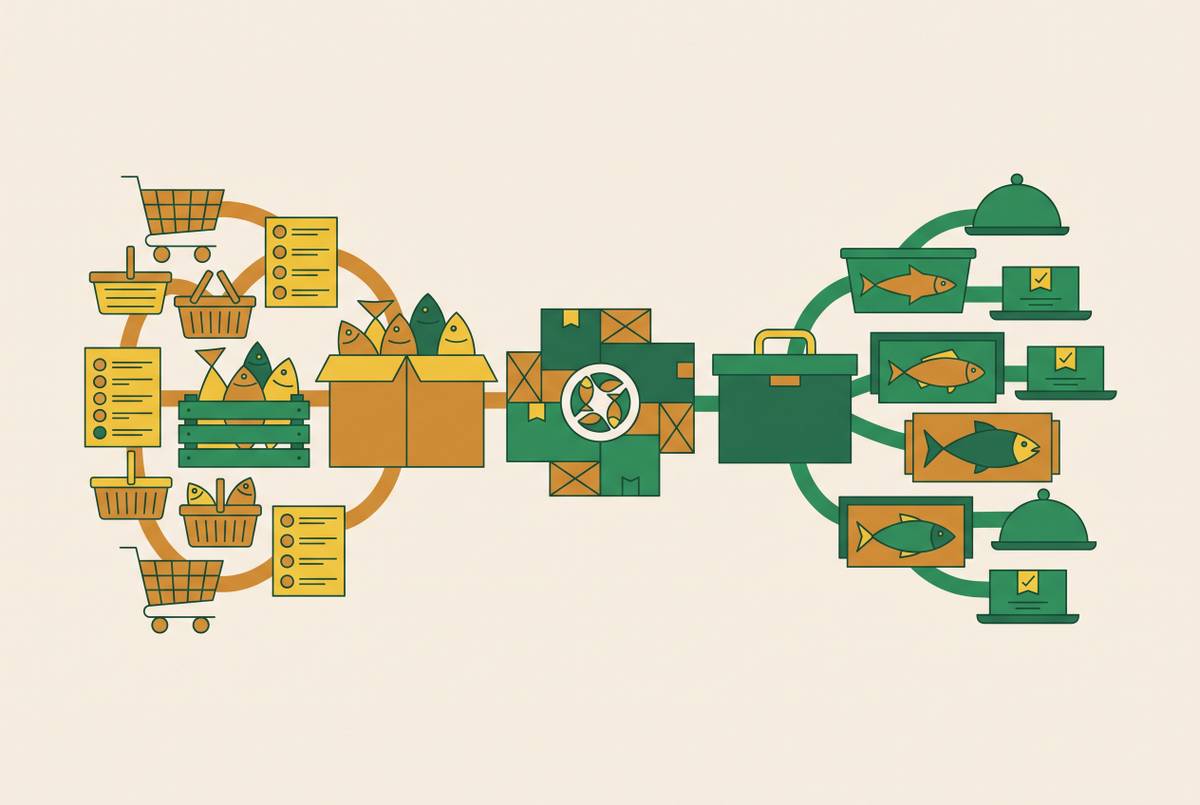
Picture a Tuesday morning at a mid-sized seafood distributor. One order comes in by text at 6:40 a.m. Another arrives as a voicemail left overnight, half of it garbled by a bad connection. A third shows up as a photo of a handwritten note, taped to the side of a to-go box and handed to a driver on a prior delivery. A fourth is a WhatsApp message from a restaurant buyer who only communicates that way. All four might be the same customer, placing what amounts to one order split across four channels, none of them structured, none of them consistent in format. It is the default condition most mornings at most food distributors, as the Pepper AI guide to food distribution tools describes.
Every one of those channels captures the order in a different shape, and no general-purpose system holds one accurate, current view that reconciles all of them. The cost of that fragmentation is direct and mechanical: every manual transcription step between a voicemail or a text message and the ERP is a place where a product code gets swapped, a quantity gets misheard, or a delivery address gets typed wrong. Multilingual shorthand compounds the problem further. An order might arrive in mixed English and Mandarin, reference a product by a regional nickname no training set would recognize, and use trade abbreviations that a general-purpose language model has simply never seen. The IFDA's 2025 AI guide for foodservice distribution profiles order intake automation as a featured AI application among vendor solutions, but its survey data puts ecommerce, office and workflow automation, and customer service ahead of it as the industry's top AI priorities. That ranking makes sense once you see how deep and how routine the manual transcription bottleneck actually is: distributors have learned to route around it for so long that fixing it competes with several other fires at once. General-purpose intake tools built to parse a structured email or a web form simply assume the order already comes in a parseable shape. In food distribution, it usually doesn't.
Asakana, an AI order intake agent built specifically for food distributors, is designed to capture orders across all the channels customers already use (text, email, messaging apps, phone calls, and voicemails) and convert them into structured ERP drafts without requiring customers to standardize how they communicate or distributors to retrain their teams on new intake workflows. That design choice matters because it accepts the fragmentation as the starting condition rather than asking the customer base to change habits built up over years.
Why seafood-specific terminology is a functional filter, not a cosmetic preference
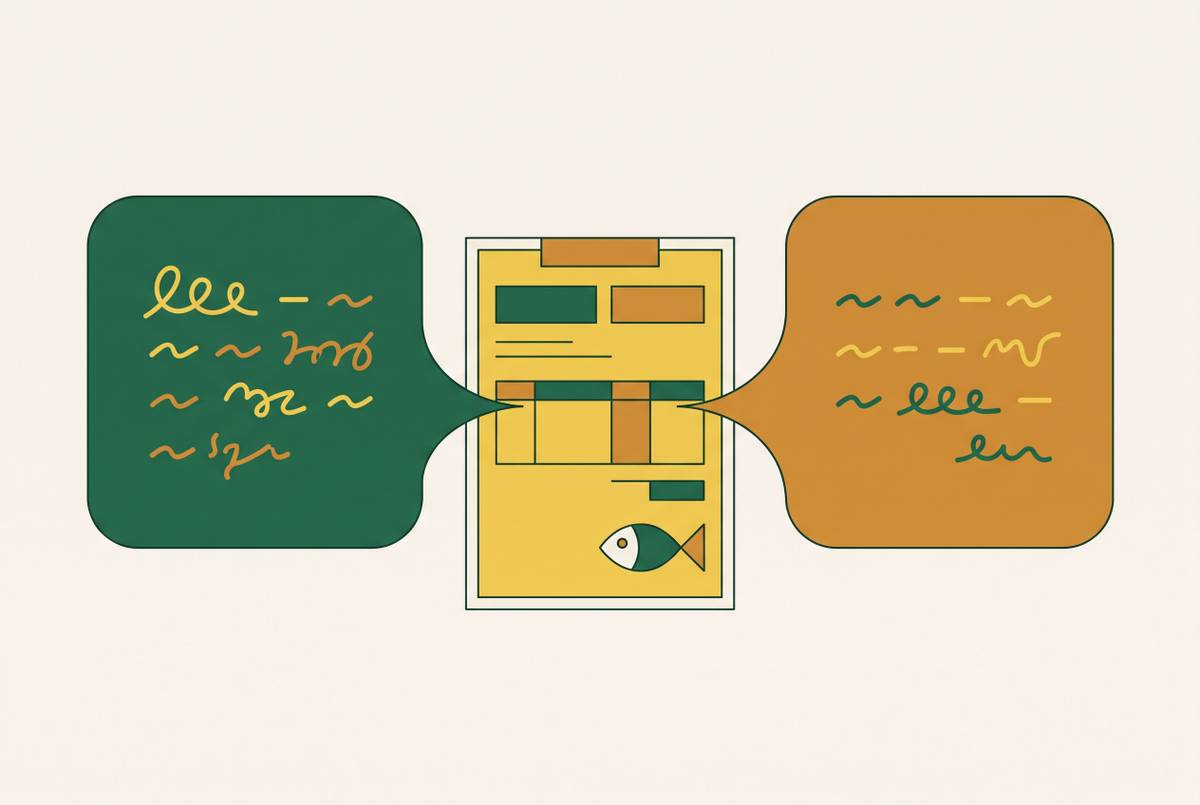
Seafood orders carry a dense layer of industry shorthand that functions almost like a second language: IQF, H&G, P&D, PBO, FAS, IVP, C&K, S&G, GGS, TW. Each abbreviation names a distinct processing or packaging specification, and each one determines what gets pulled off the shelf, how the line item gets priced, and what appears on the final invoice. A generic natural language model trained on general business text has no real basis for interpreting any of it correctly, because none of it appears with any frequency outside the trade itself.
Consider an order for "2 × 10lb H&G IQF skin-on PBO salmon." If an AI system can't parse that string without a human stepping in to correct it, it hasn't actually automated order intake. It has just moved the risk of error further downstream, where it appears at the pick face, or worse, at the customer's loading dock when the wrong product arrives. The same failure mode occurs with grading language. "Ocean Run" denotes a pack of random weight and size product, a catch-weight carton rather than a fixed one, and a general B2B platform typically has no native way to represent that concept. Misreading one abbreviation doesn't cause a visible software error. It causes a correct-looking order that turns out to be wrong only once it's too late to fix cheaply.
This isn't a problem a training-data patch solves after the fact. Fixing it requires a model built and tested against the actual working vocabulary of the seafood and specialty food trade from the start. An order intake system with deep seafood industry roots treats multilingual shorthand and processing terminology, including IQF, H&G, P&D, and PBO, as a first-class language problem built into its core model from the start. Misinterpreting a single specification abbreviation becomes visible immediately, either at the pick face or on the invoice, and by then the cost has already been incurred.
Catch weight is not a product attribute, it is an architectural requirement that general platforms consistently get wrong
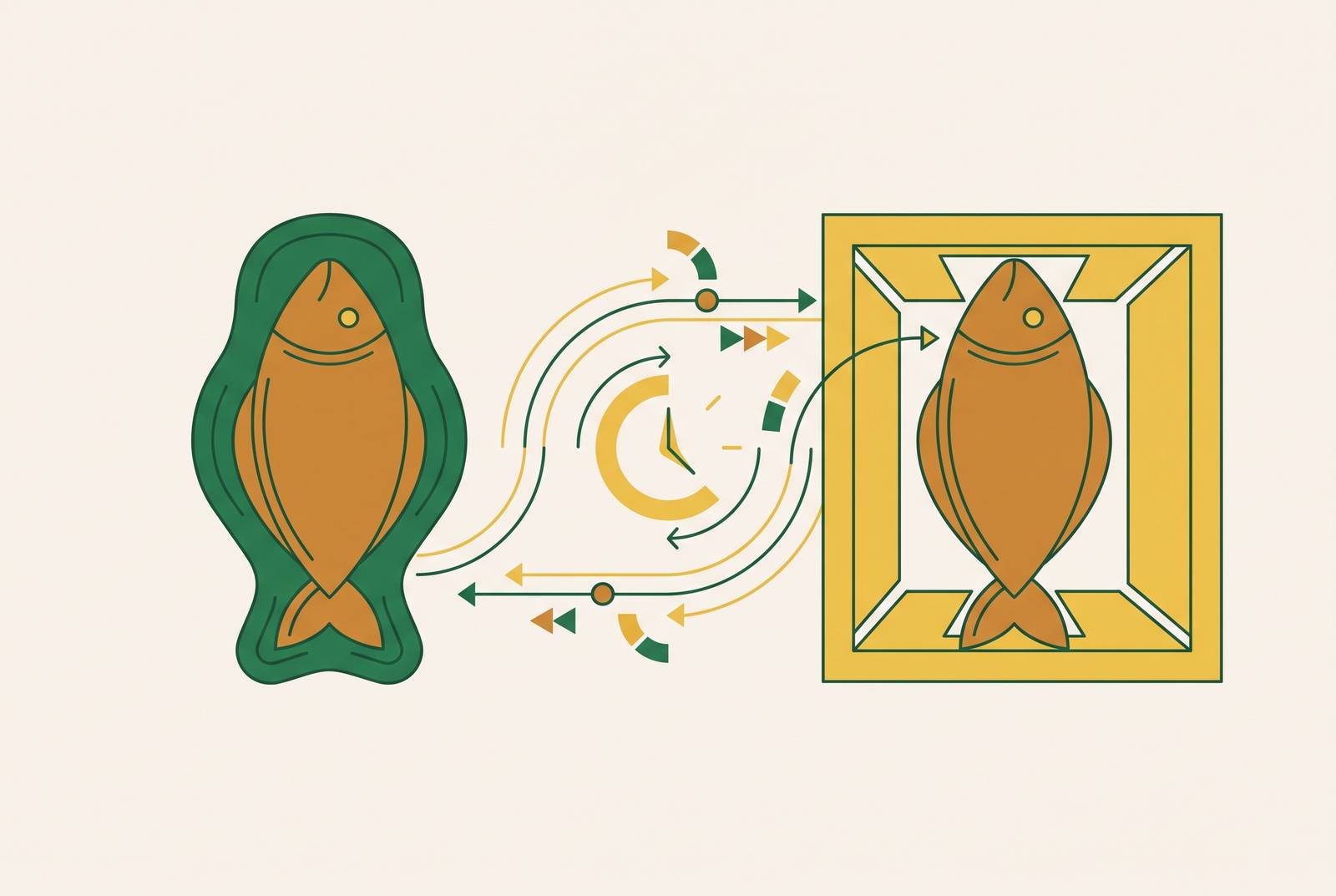
Catch weight describes a transaction where the commercial unit (a case, a piece) has a weight that can't be known in advance. The buyer orders by unit count, but the invoice gets written against the actual weight measured at pick or at delivery. A case of whole snapper doesn't behave like a case of canned goods. Each fish inside is a different size, the case weighs whatever those fish happen to add up to, and the buyer pays by the pound. That means inventory, invoicing, and traceability all have to carry two live numbers at once: the quantity that was ordered, and the weight that gets invoiced.
The mistake general platforms make, repeatedly, is treating catch weight as an attribute to flag on a product record rather than building variable-quantity invoicing into the data model from the start. A flag can be set wrong, ignored, or dropped during a system upgrade, while a true data-model requirement is enforced on every transaction. Specialized platforms built for perishable distribution encode catch-weight and random-weight cartons directly into the data model, treating variable unit-of-measure as a native order primitive. That means the system can capture, flag, and price a random-weight line without someone reconciling it by hand after the fact.
Freshline, a platform built specifically for perishable food distribution, names catch-weight handling as a core, native capability rather than an add-on, and one customer testimonial credits that handling with eliminating what had been a steady stream of pricing errors. When a general platform forces catch weight through a manual workaround or a custom field instead, that workaround tends to survive right up until the next system upgrade breaks it. The failure appears not as a bug report but as a wrong number on a customer's invoice, and in a business where margins on seafood and protein can run thin, one wrong invoice can erase the profit on a dozen correct ones.
Daily price changes and tight delivery windows compound the data-model problem into a real-time operations failure
Even a platform that solved catch weight perfectly would still run into a second wall: perishable food pricing moves within a single trading day. Protein and seafood prices shift with market conditions, landed cost, and available supply, so the price quoted when an order gets confirmed may not match the price in effect when that order gets picked. A system has to close that gap automatically, without someone catching it by hand after the fact.
Delivery windows compress the problem further. In fresh food distribution, those windows are measured in hours, not days. A missed cutoff means spoiled product, or a restaurant that opens short on what it needs for lunch service, not simply a delayed shipment the way it might be for office furniture. The tolerance for latency between order intake and warehouse operations is close to zero. A general-purpose platform built around overnight batch synchronization might work fine for a hardware wholesaler who checks inventory once a day, but that same architecture leaves a gap between what the system shows as available and what's actually true on the floor. In perishable distribution, that gap turns directly into overselling, short shipments, and a steady decline in on-time, in-full delivery performance. No feature list can fix a timing mismatch that's built into the platform's underlying synchronization model.
What the platform landscape looks like for distributors deciding between specialized and general options
The market for food distribution order technology splits into two architectures, and that split tells you where each vendor believes complexity should be managed. One group of platforms sits on top of a distributor's existing ERP and handles intake only. The other group replaces or consolidates the ERP entirely, building perishable-specific logic into the core system.
Among the intake specialists, Choco reads emails, texts, voicemails, images, and handwritten notes, matches informal phrasing to SKUs using customer order history, and presents results for review before the order flows into the ERP. An Autopilot mode, launched in 2025, processes orders with no human touch when the system's confidence is high enough, and it's recognized as a strong option for AI order intake layered on top of an existing ERP. Asakana sits in this same category of ERP-preserving intake tools, built with particular depth in seafood terminology and multilingual, multichannel capture.
Among the full vertical ERPs with AI intake built in, Fresho captures orders from every channel and runs picking, delivery, and invoicing inside one system, with an OrderPilot AI feature that turns email, text, voicemail, WhatsApp, and PDF messages into structured sales orders ready for approval, by Fresho's own description of the tool. GrubMarket's WholesaleWare grew out of software GrubMarket originally built to run its own distribution subsidiaries, and it now covers financials, inventory, lot traceability, grower accounting, and routing and logistics, with an AI Orders module handling email and PDF intake. Freshline is an AI-powered ecommerce and order intake platform built specifically for perishable food distribution, with native handling for catch weight, flexible delivery zones, and complex cutoff schedules, and it integrates with QuickBooks Online, NetSuite, SAP, and Microsoft Dynamics. Freshline counts more than 100 food distributors across North America among its customers, including Cooke Seafood, True World Foods, Windsor Meats, and Bitarco Produce, and one mid-sized seafood distributor using the platform sharply cut the time spent on daily phone ordering, automated the large majority of its orders, and grew online revenue substantially within months.
How to match the right platform architecture to where a distributor's complexity lives
Before you evaluate any vendor's feature list, you need to ask two questions to choose between these architectures. First, is the existing ERP a strength worth preserving, or a constraint the business needs to escape? Second, does the complexity sit mainly in intake, where orders are multilingual, multichannel, and full of shorthand, or does it run through the whole operations stack, touching catch weight, lot traceability, FEFO rotation, and route planning?
A distributor with a functioning ERP whose real pain sits at the order desk, in transcription volume, missed orders, and multilingual customers, gets the fastest payoff from an intake specialist that layers on top of what's already working. A distributor whose ERP can't handle catch weight, has no native shelf-life alerting, or enforces FEFO only through manual workarounds is facing a problem that no intake layer can fix, because the complexity lives downstream of intake, inside the core system itself. For that distributor, a vertical ERP built with perishable-native logic from the ground up is the right category to evaluate.
Seafood distributors and others carrying high-complexity protein lines should treat catch-weight architecture as the first filter applied to any vendor, before any other capability gets a look. A platform that can't natively invoice by actual weight at the point of pick isn't a partial answer to the problem. It simply hasn't solved the part of the business that matters most, and a slick demo can paper over that gap until the first pricing error appears on a live invoice.
Why the strongest argument for specialization is risk rather than capability
The case for choosing a specialized platform rests less on counting features and more on understanding where failure hides. A general platform's weaknesses in perishable distribution stay invisible right up until they produce a financial error, a compliance gap, or a customer who doesn't get what they ordered. A catch-weight workaround that breaks during a routine software upgrade, a traceability gap that appears in the middle of an FDA recall, a mistranslated seafood abbreviation that sends the wrong product to a restaurant's loading dock: none of these appear as a bug in a sales demo. Each one becomes a crisis once the system is handling real orders at real volume.
The IFDA's 2025 AI guide frames the risk of not pursuing AI adoption as a matter of competitive disadvantage and slower growth, not merely inefficiency, and it notes that industry leaders increasingly judge technology by realistic, measurable returns rather than by how many features a platform claims to have. Choosing a "good enough" general platform is not a neutral decision. In perishable distribution, it's a decision to keep absorbing the cost of manual workarounds, pricing errors, and compliance exposure that purpose-built systems remove at the level of the architecture itself, before any of those costs ever reach a customer or an auditor.
Most distributors share one real ambition: growing order volume without growing headcount at the same rate. That ratio can't hold if you're on a platform whose perishable gaps demand more manual correction every time order volume climbs. Each new order on a mismatched platform adds not just revenue but risk, and the distributor ends up hiring to manage errors the architecture itself keeps producing. Specialization is the only architecture that lets growth in order volume stay separate from growth in the headcount needed to catch what the system gets wrong, not a premium add-on for distributors who can afford it.