How Independent Restaurant Chefs Specify Seafood vs. Chain Buyers
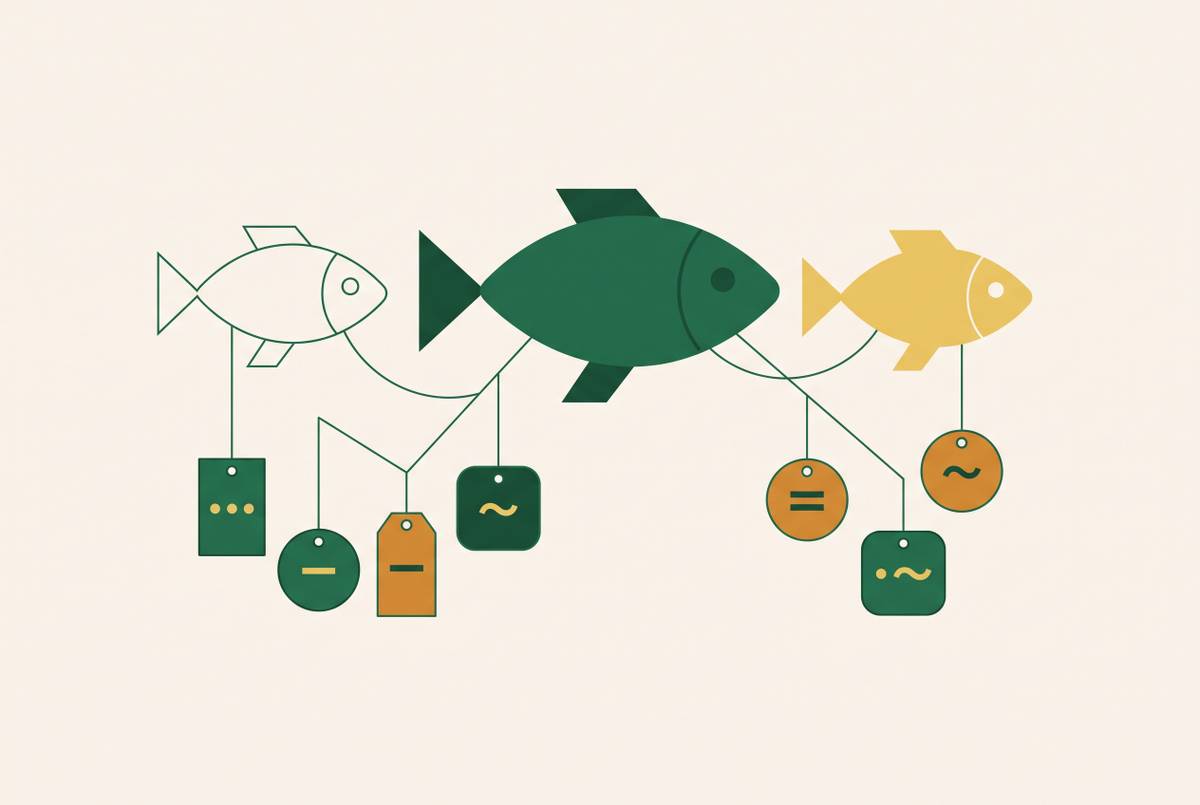
Independent chefs order by judgment; chains order by contract written months ago.
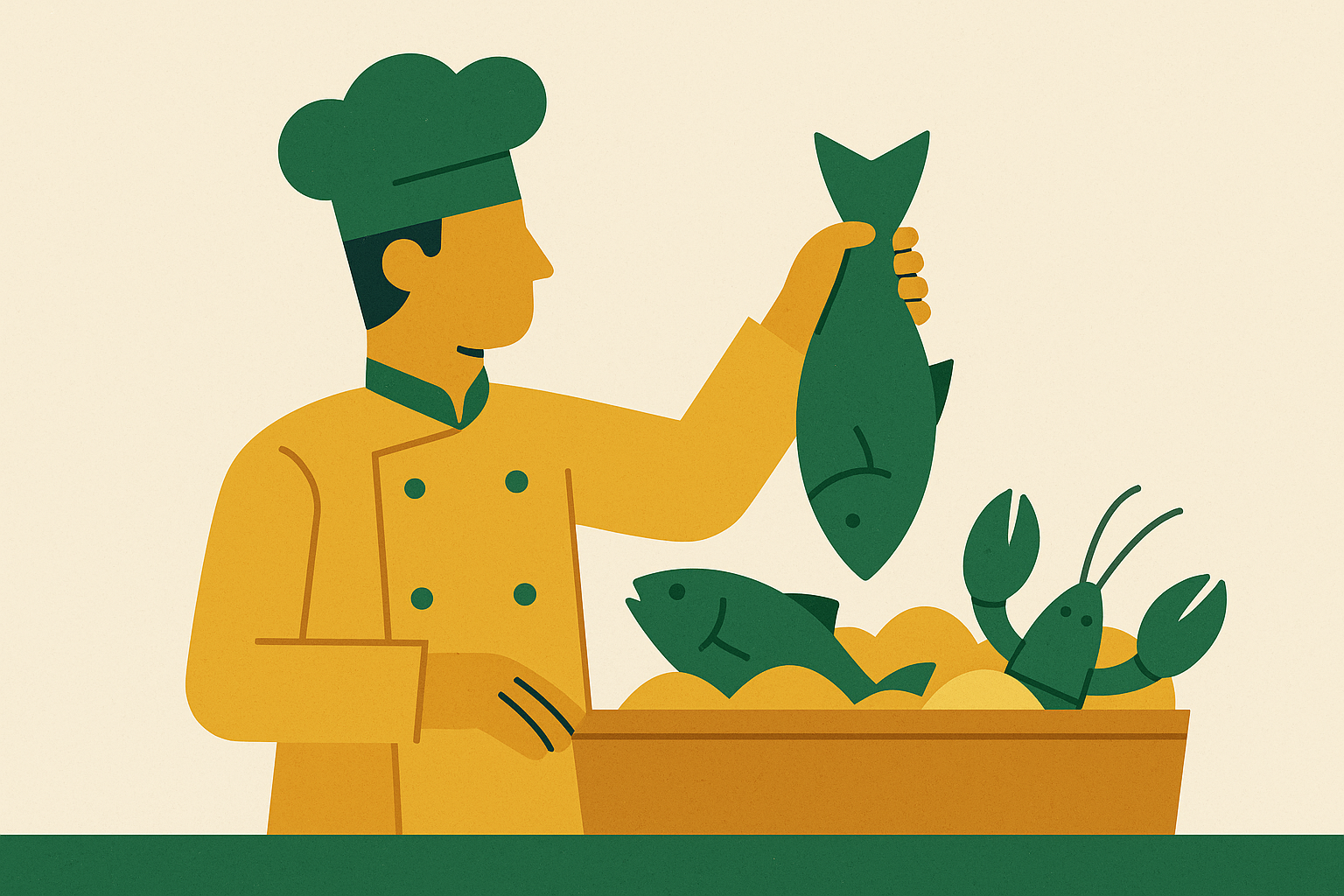
Two orders land in the same overnight queue, and they do not mean the same thing. One reads "two cases U10 dry diver, and whatever's best on halibut today." The other arrives as an item number, a pack spec, and a grade tolerance that were settled months ago. A distributor has to fulfill both before a kitchen opens for service, and treating them as versions of the same task is where the trouble starts.
Why the same seafood order means two different things
The order desk at any seafood distributor runs on a strange kind of bilingualism. In the same overnight window, a buyer might get a text from an independent chef that reads like a note passed between friends, and a scheduled release from a chain location that reads like a line in a database. Both need to be on a truck by morning. Both come from a kitchen that has a service in hours, not days, to recover from a mistake.
The chain order carries its specification inside itself: item numbers, pack specs, grade tolerances, all filled in before anyone at the distributor touches it. "Whatever's best on halibut today" is a request that hands a decision to someone on the other end who has to make a judgment call, in real time, about what's actually good that day.
The gap between these two order types isn't a quirk of individual customers. It comes from how each kind of restaurant is built, who gets to decide what the kitchen serves, and how far upstream that decision was made. Understanding that structure, not just the words in the order, is what lets a distributor interpret either message correctly.
Independent restaurant ownership
An independent restaurant is defined by the fact that one person, or a small ownership group, controls the whole operation: the menu, the sourcing, the pricing, the choice of supplier. No parent company signs off on any of it. That means every purchasing decision moves at the speed of one person's judgment, not at the speed of a committee.
That owner or chef can change a menu item on short notice because there's no multi-department approval cycle standing between an idea and the plate. The chef picks the supplier, and the relationship that follows often runs on trust built over years.
That same freedom means what the kitchen needs from a distributor can shift from one week to the next, depending on what's in season, what showed up at the dock, or what the chef is feeling creative about. Because the chef owns the purchasing decision directly, the order reflects culinary intent happening in real time. It is not a release against a spec somebody wrote down a year ago.
Chain purchasing structure locks seafood specs before the order is placed
A chain buyer never specifies seafood at the moment of ordering. The specification work happened months or years earlier, during contract negotiation, and what arrives at the order desk is a release against terms that were fixed long before anyone picked up the phone.
Chain restaurants run on standardized menus and recipe specs: every location is expected to produce the same dish to the same documented tolerances, whether it's served in one city or five hundred. Ad hoc substitution, the kind an independent chef does without thinking twice, is close to structurally impossible in that system.
The supplier relationship that results is formal and contractual by design. Centralized purchasing lowers per-unit food costs for the chain, but it buys that savings by locking in specs that the distributor then has to hit without deviation. Captain D's, a 527-unit operation that sources hundreds of thousands of pounds of fish every week, makes this explicit: it communicates its expectations up front and requires suppliers to prove they can deliver to those expectations before the relationship even begins. SpenDifference runs on a related logic for restaurant groups that haven't reached that scale on their own. It operates as a cooperative buying club for midsize chains with 100 or more units, letting them buy with the leverage of a much larger chain even though no single one of them has that volume alone. It formalizes, in other words, what an independent operator would otherwise handle through a personal phone call and a handshake.
By the time an order reaches the distributor's desk, the species, the pack size, the grade, and the item number are already locked. The purchase order is built to be read by a machine, and it mostly explains itself.
The compressed language independent chefs use to specify seafood
Every word in an independent chef's seafood order is doing more work than it looks like it's doing. A term that reads as shorthand to an outsider is, to the chef, a precise instruction about quality, process, harvest method, or the dish the term is meant to produce, and the distributor's intake staff have to get every one of those readings right, fast, without a chance to call and check.
Start with size counts. Shrimp are sized the same way, with a count range like 16/20 telling the kitchen how many pieces it's getting per pound. That count isn't a detail. It sets the price, dictates how the product gets packed, and decides what the finished dish looks like once it hits the plate.
Then there's the distinction between dry and wet, which matters as much as the count itself. When a chef writes "U10 dry," that second word specifies what the finished dish is supposed to taste like, not the size.
Harvest method adds another layer on top of that. Terms like diver and dayboat tell the distributor how the scallop came out of the water and how long it took to get from the ocean to the dock, both of which shape freshness and justify a higher price. Those two syllables carry a quality expectation and a price assumption together when a chef writes them into an order.
A handful of processing abbreviations round out the vocabulary: C/C for center-cut, skin-on or skin-off, IQF for individually quick frozen, and catch weight, which signals that the case weight will vary. Each of those terms is really a decision about prep, handling, yield, and labor downstream in the kitchen, compressed into two or three letters that the distributor has to expand correctly.
And the open-ended line, the "whatever's best on halibut today," is not an admission that the chef doesn't know what they want. It's a deliberate handoff of judgment to the distributor, which only works if the distributor actually has live knowledge of what's available and a real sense of where that particular kitchen's quality bar sits. NOAA's own grading language for cod fillets gives a sense of how exacting that bar can get in formal terms: Grade A requires a total score of at least 85 points across appearance, size, freedom from defects, and character, Grade B fish gets diverted toward processed product, and anything that fails to clear the Grade B threshold is rejected outright as substandard. A chef placing an order rarely uses that vocabulary out loud, but the standard behind "whatever's best" maps onto exactly that kind of scale.
What chain buyers send to the order desk
A chain purchase order reads like a finished document because all the specification work already happened somewhere else, long before the order desk saw it. The desk's job on a chain release is accurate, on-time fulfillment against a spec that's already fixed, not interpretation of an open request.
Item numbers, GTIN codes, and pack specs arrive filled in, and the distributor's own catalog entry for that item already carries the species, the grade, the processing method, and the pack size the chain's R&D team settled on back when the contract was signed. What the chain buyer is actually purchasing, more than any single shipment, is consistency: the same fillet, the same size, the same texture, at every location, every week, because that consistency is what lets the chain hold a fixed plate cost and deliver the same guest experience in every market. A substitution an independent chef would welcome as "whatever's best today" becomes a compliance failure at a chain location.
Captain D's again shows what that relationship looks like in practice: expectations communicated up front, suppliers required to demonstrate they can actually deliver before the relationship starts, and loyalty expected to run in both directions once it does. None of that depends on a buyer's personal trust in a sales rep. It runs on documented standards that both sides can point to. Adelphia Seafood's long-running relationship with Darden Restaurants illustrates the same thing from the supply side: serving a major restaurant group means holding consistent quality, custom cutting to spec, and reliable delivery across many locations at once, with the specification fixed and the distributor's entire job being to hit it, delivery after delivery.
The scale of a chain order changes the stakes in a way volume alone doesn't capture. Captain D's sources around 500,000 pounds of fish a week across its 527 locations, so a single spec error doesn't stay contained to one kitchen. Substitution requests, when a chain location does need one, move through a formal approval channel rather than a quick text to a rep, often with corporate sign-off required before the distributor can act. None of this makes a chain order simpler to fulfill than an independent chef's order. It makes the complexity sit in a different place: locked into the contract ahead of time rather than carried in the order itself, with the consequences of a mistake sized to the whole network rather than one dining room.
Seafood amplifies every intake error for both buyer types
Seafood turns an ordinary intake mistake into one that can't be fixed later, because the product's perishability and natural variability mean there's no window to correct a misread order once the truck has left the dock. A break in cold-chain temperature control, even for an hour, can ruin the texture and safety of a fillet, and an order error that isn't caught until morning delivery can't be undone once the kitchen is already looking at a service that starts in a few hours.
Confusing dry and wet scallops is not a minor substitution a chef can work around. Wet scallops, carrying the sodium triphosphate treatment, won't sear the way a dry scallop sears. They release water into the pan and come out with the rubbery texture and soapy flavor the chef specifically ordered against when they wrote "dry" in the first place. The dish fails on the pass, and the distributor owns the complaint that follows.
Variable case weight is where the system has to track quantity precisely, and that is where it breaks down. A lot of finfish ships by the pound with a variable weight attached to each case, and federal rules under FSMA require quantity tracking at every critical tracking event in the supply chain. It creates a traceability gap, and that gap is a regulatory violation, not an inconvenience to be smoothed over later. A distributor can respond well when a boat is delayed or a season ends early only if the original order was captured precisely enough to know what substitution actually fits what the kitchen needed.
How a distributor's intake system fails by buyer type
A single, undifferentiated intake process will get both buyer types wrong, just in opposite directions. Chain orders need precision against a fixed SKU. Independent chef orders need interpretation of compressed, contextual language. A workflow built for one will mishandle the other.
For an independent chef account, the failure mode is misreading intent. A system that can't tell dry from wet, or that maps "diver scallop" to the nearest catalog entry by species alone and ignores everything else in the line, will produce a wrong order that the chef has no way to catch before service starts. For a chain account, the failure appears as a catalog mismatch instead. If the SKU master conflates "U10 dry" with "U10 wet" because nobody built the catalog to hold that distinction in the first place, the system generates wrong orders at the speed of automation rather than the speed of a human typing a note, and the volume of the mistake scales with how automated the ordering pipeline has become.
Independent accounts also carry a layer of context that lives nowhere but in the memory of the people at the order desk: which SKU a given chef actually means by a vague term, which delivery pattern a kitchen expects, the fact that a rep knows this particular chef always means dayboat scallops when he just says fresh. None of that is written into any system. Multichannel intake makes the whole picture harder to hold onto. Independent chef orders come in over text, email, WhatsApp, voicemail, and phone calls, while chain releases arrive through EDI, email, or a buying portal. A distributor running intake across disconnected channels with no shared view of what was ordered, by whom, and against which spec is exposed on both sides of this divide at once, and the two failure modes don't cancel each other out. They stack.